
As an Amazon Associate I earn from qualifying purchases. Product links below are affiliate links. These are editorial suggestions, not claims of hands-on testing; choose only what solves your specific problem.
The short answer
There is no single US airline carry-on rule. Size, weight, personal-item limits and fees vary by airline, fare, route and sometimes operating carrier. Use the airline’s current baggage page and measure your bag before leaving for the airport.
US airline carry-on rules: verify the fare, not just the airline name
Travelers often search for one simple carry-on size, but the real rule can change with airline, fare, route, aircraft and operating carrier. A basic economy ticket may not include the same bag as a standard economy fare. On a codeshare, the airline selling the ticket may not be the one operating the flight. Knowing which of those variables applies to your ticket is the whole job.
It is also worth separating two rulebooks that are easy to confuse. The TSA decides what may be inside your bag — liquids, electronics, sharp objects. Your airline decides how big that bag may be and whether it is included in your fare. A liquid that passes security tells you nothing about whether your bag is free.
- Your allowance depends on the fare you bought, not only on the airline's name.
- The operating carrier on a codeshare may have different rules from the airline you booked with.
- Measure the packed bag from the outside, wheels and handle included.
- Adding a bag online is almost always cheaper than adding it at the airport.
Where the differences actually appear
Carry-on policies vary in a small number of predictable places. If you check these four before every trip, nothing at the gate will surprise you.
| Booking detail | What can change | Check here |
|---|---|---|
| Fare | Included cabin bag, personal item and fee | Fare rules and booking confirmation |
| Operating carrier | Size, weight and enforcement | Carrier operating the segment |
| Route/aircraft | Available space or exceptions | Exact itinerary and aircraft notes |
| Personal item | Dimensions and under-seat requirement | Current carrier baggage page |
Check your own ticket, not a remembered rule
Never rely on a number you remember from a previous trip. Open the airline's own baggage page, find your exact fare, and note the date you checked it. If a policy is genuinely unclear — and some are — treat that as a reason to call, not a reason to guess.
What you want at the end is a clear answer to four questions: what can I take at no extra cost, what has to fit under the seat, what might cost extra, and what will be checked again at the gate.
- Separate personal item, carry-on and checked bag.
- Show fare-specific exceptions instead of one airline-wide claim.
- Keep TSA liquid guidance in a separate box.
- Add “last checked” next to volatile policy data.
Where the rule is enforced during your day
A carry-on rule is not applied once. It can be checked at bag drop, at the security line, at the gate and occasionally on the jet bridge — and the standard tightens as you get closer to the aircraft, because that is when overhead space runs out.
Knowing where each check happens tells you when to fix a problem. A bag that is slightly over at check-in is a five-dollar decision; the same bag at the gate is a rushed one.
| Where | Who checks | What happens if the bag is over |
|---|---|---|
| Online check-in | Nobody, but you can pay here | Cheapest moment to add a bag |
| Bag drop counter | Airline staff, sometimes with a sizer | Higher airport rate applies |
| Security | TSA checks contents, not size | Liquids and electronics matter here, not dimensions |
| Gate | Gate agent, sizer present on busy flights | Highest fee, or gate-checked into the hold |
| Jet bridge | Crew, when bins are already full | Gate-checked, usually free, but you lose access in flight |
Your five-minute pre-flight bag check
Do this once for each trip and the whole question is settled before you leave the house.
- Open the booking and identify the operating carrier.
- Read the allowance for the exact fare.
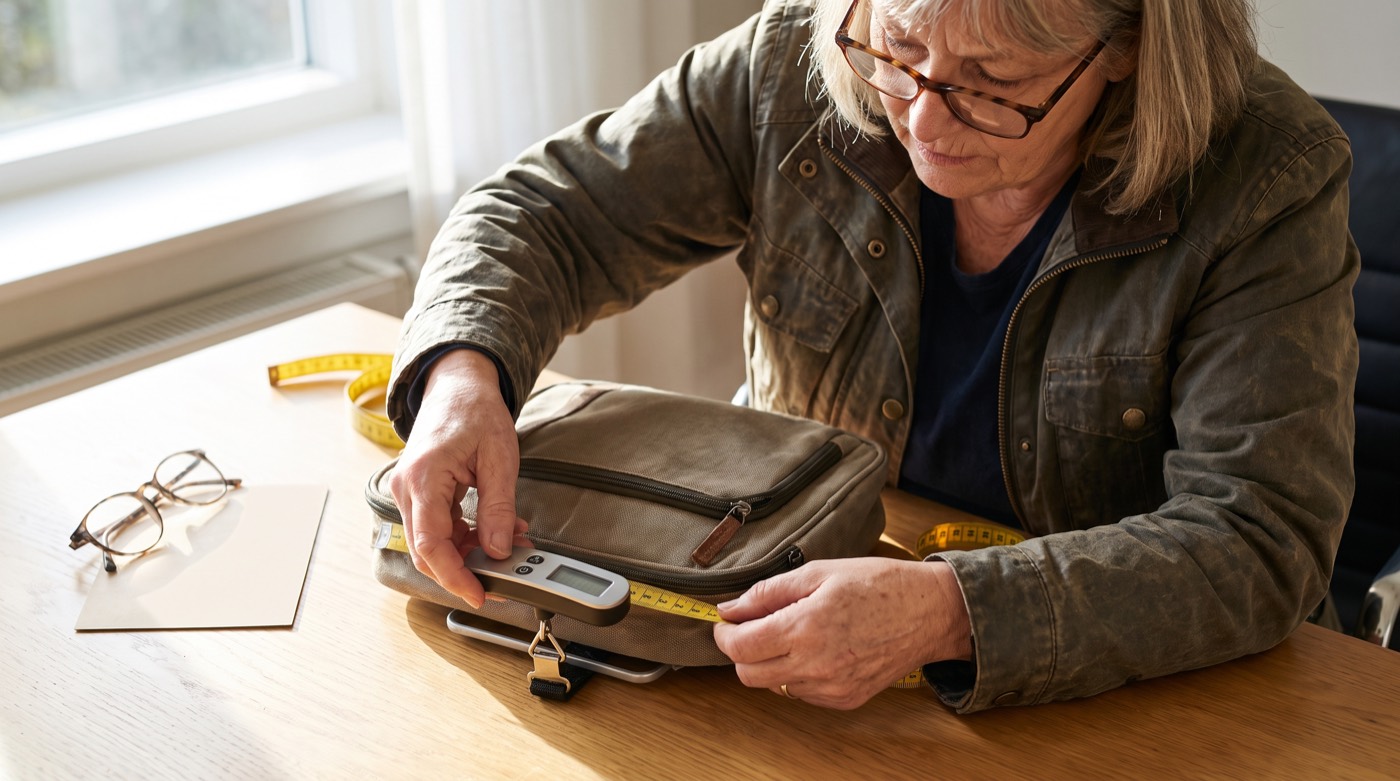
- Measure and weigh the packed bag.
- Check personal-item dimensions and under-seat requirements.
- Save the official policy page or screenshot.
- Recheck before departure if the booking, fare or carrier changes.
Keeping up with rules that keep changing
Baggage terms are among the fastest-changing parts of an airline's conditions, and they rarely change in the passenger's favour. A rule you confirmed last year is not evidence about this year.
The good news is that the check is quick once you know where to look. Bookmark your two or three usual airlines' baggage pages and open them when you book, not when you pack.
- Recheck the allowance when you book and again the week you fly.
- Save a screenshot of the rule with the date — useful if you are challenged.
- Watch for the personal-item size, not just the cabin bag.
- On a codeshare, check the airline that is actually operating the flight.
Questions people ask
Is there one standard US carry-on size?
No. Airline, fare, route, aircraft and operating carrier can change the allowance.
Does TSA set baggage fees?
No. TSA sets security-screening rules; the airline sets baggage allowance and fees.
How often should airline-rule tables be checked?
At a defined cadence and again before peak travel or any itinerary, fare or carrier change.
Can I rely on a comparison row for my flight?
Only after opening the linked official rule for your exact fare, route and operating carrier.
Sources & how we keep this current
Rules, fees and programs change. These are the official pages we check — go to them for the version that applies on your travel date.
Last reviewed: September 7, 2026. Confirm the linked official guidance for your own travel date.