As an Amazon Associate I earn from qualifying purchases. Product links below are affiliate links. These are editorial suggestions, not claims of hands-on testing; choose only what solves your specific problem.
The short answer
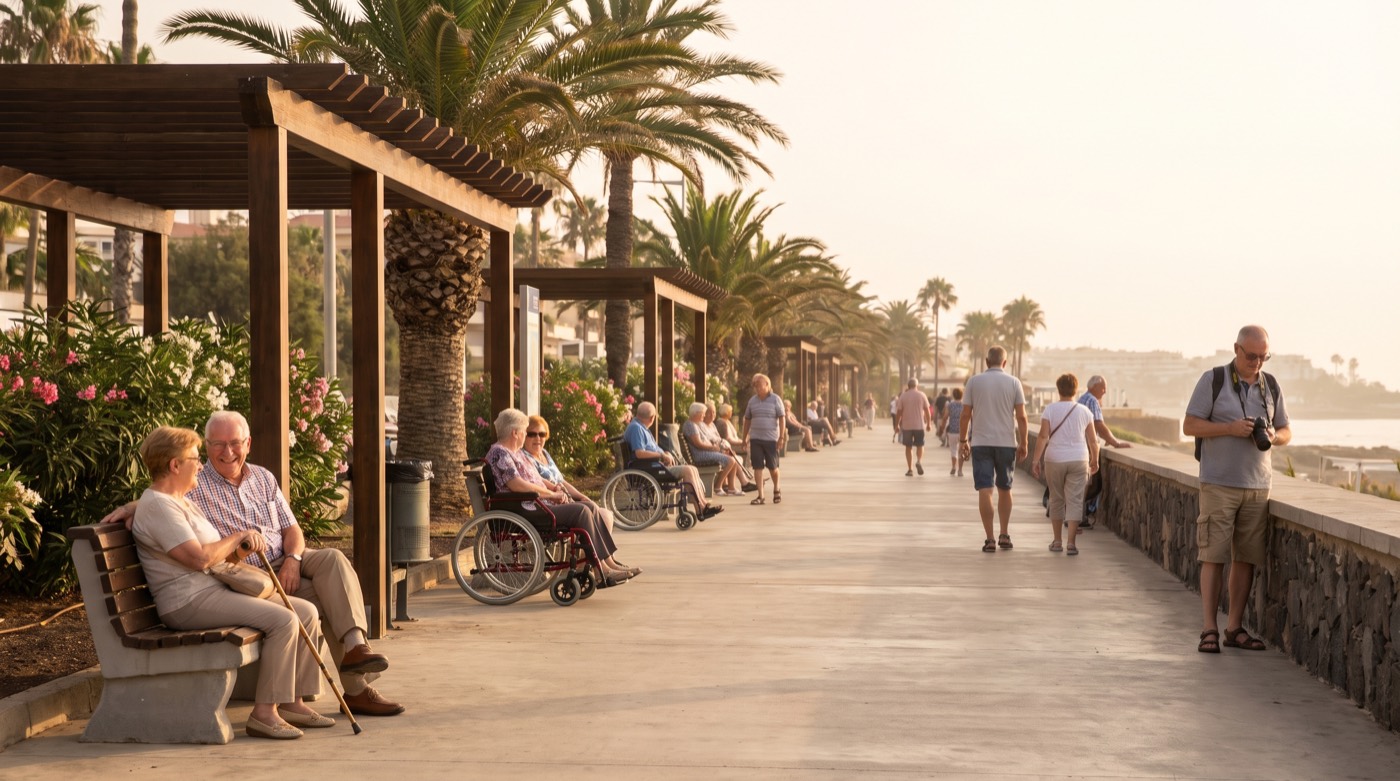
A destination is senior-friendly when the specifics work: a short simple airport transfer, level ground underfoot, walkable distances with benches along the way, step-free public transport, accessible restrooms, nearby healthcare and a season you can comfortably handle.
“Senior-friendly” has to mean something specific
Plenty of destinations are described as senior-friendly. Very few articles say what that means, and the vague ones are the least useful. A destination is not easy because it is quiet or because retirees visit it. It is easy because of concrete, checkable things: how far you walk between the useful places, what the ground is like underfoot, how often you can sit down, and how quickly you could see a doctor.
The good news is that these are all things you can research in an afternoon, before you commit to anything.
The nine checks that decide whether a place will suit you
| What to check | The question to ask | Where to find the answer |
|---|---|---|
| Arrival transfer | How do I get from the airport to the hotel, and how long does it take? | Hotel website, airport transport page |
| Terrain | Is the old town cobbled, hilly, or stepped? | Street-level map imagery |
| Walking distances | How far between the hotel, food and the main sights? | A map with a walking route drawn |
| Seating | Are there benches along the routes I will walk? | Photographs and street imagery |
| Public transport | Are buses and trams step-free, and how frequent? | Local transport authority site |
| Restrooms | Are public restrooms available and accessible? | City tourism office pages |
| Healthcare | Where is the nearest hospital and pharmacy? | Map search; note the address before you travel |
| Season and heat | What is the temperature and humidity when I go? | Historical climate data, not brochure photos |
| Pace of activities | Can I do one main thing per day, not four? | Your own itinerary draft |
Street-level map imagery is the single most useful tool on this list. Five minutes “walking” the route from a candidate hotel to the nearest restaurant tells you more about a destination's suitability than a dozen reviews.
Build the trip around rest, not around sights
The most common mistake is not choosing the wrong city. It is choosing the right city and then scheduling it like a much younger traveler's holiday. A destination that would have been delightful becomes exhausting by day three.
- Plan one significant activity per day, and treat the second as a bonus.
- Book accommodation close to what you actually want to see, even if it costs more.
- Choose shoulder season where you can: fewer crowds, gentler temperatures, shorter queues.
- Build in a rest day after the flight and before the flight home.
- Keep the afternoon free on arrival day, whatever the itinerary promises.
- Prefer two nights minimum in each place; one-night stops are where fatigue accumulates.

Before you book anything
- Draw your likely daily route on a map and measure the walking distance.
- Check the terrain of that route with street-level imagery.
- Confirm the airport transfer, its cost and its duration.
- Note the nearest hospital and pharmacy to your accommodation.
- Check travel advisories and any entry requirements for your passport.
- Confirm your travel insurance covers your age and any existing conditions.
- Read the cancellation terms on every booking before you pay.
If a destination survives all seven checks, it will very likely suit you. If it fails on terrain or healthcare access, it is not a bad place — it is simply a better fit for a different trip, or a different year.
Questions people ask
What makes a destination senior-friendly?
Specifics, not atmosphere: a short simple transfer from the airport, level ground, walkable distances, benches, step-free transport, accessible restrooms, nearby healthcare and a manageable season.
How do I check the terrain before I book?
Use street-level map imagery to “walk” the route from a candidate hotel to the places you would actually go. Cobbles, hills and steps are visible in seconds.
How many activities should I plan per day?
One main activity, with anything else treated as optional. The most common cause of an exhausting trip is a good destination scheduled too tightly.
Should I buy travel insurance?
Check carefully whether a policy covers your age and any existing conditions before you rely on it, and read what it requires you to declare. Read the policy itself, not the summary on the booking page.
Sources & how we keep this current
Rules, fees and programs change. These are the official pages we check — go to them for the version that applies on your travel date.
- US State Department — International Travel
- CDC — Travelers' Health
- ADA.gov — Americans with Disabilities Act
Last reviewed: September 7, 2026. Confirm the linked official guidance for your own travel date.