As an Amazon Associate I earn from qualifying purchases. Product links below are affiliate links. These are editorial suggestions, not claims of hands-on testing; choose only what solves your specific problem.
The short answer
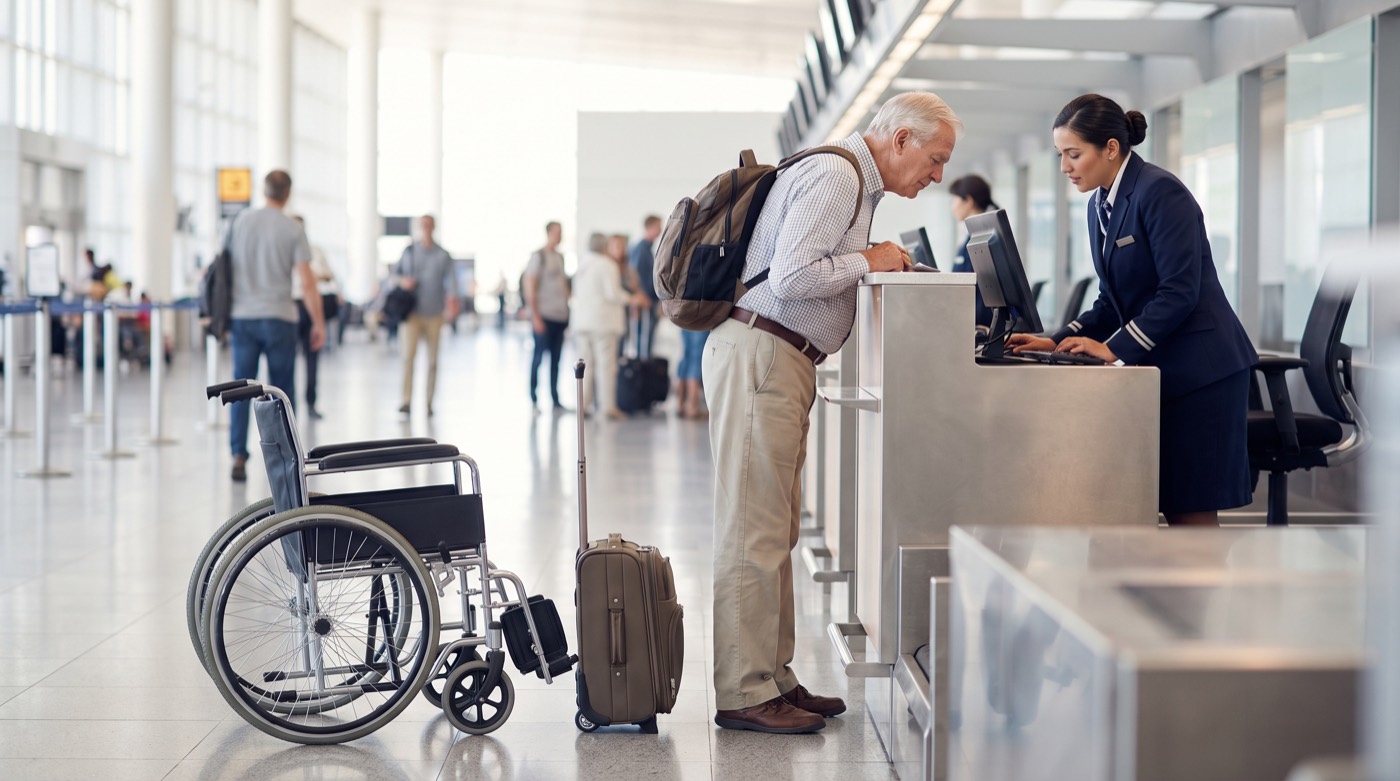
Airline assistance rules differ by carrier. Confirm six things with the airline actually operating your flight: how to request help, how far ahead, where you will be met, who handles connections, how your mobility device travels, and which number reaches a person on the day. Get it in writing.
Assistance is not the same at every airline
Every US carrier must provide assistance to passengers with a disability or reduced mobility. What differs — sometimes considerably — is how you request it, how far ahead you should call, what happens to a personal wheelchair, and who meets you when you land. A general guide cannot answer those; only your operating carrier can.
That last phrase matters. On a codeshare or regional flight, the airline whose name is on the ticket may not be the airline flying the aircraft. Assistance follows the operating carrier, so check the airline actually printed on your boarding pass.
The six things to confirm with your carrier
Whichever airline you fly, get clear answers to these six points and write them down. Together they cover almost everything that goes wrong.
| What to confirm | Why it matters |
|---|---|
| How to request assistance | Some airlines use the booking page, some require a phone call to a dedicated desk |
| How far ahead to ask | Battery-powered wheelchairs usually need the most notice |
| Where you will be met | Curbside, check-in desk or a specific meeting point inside |
| Who handles connections | Whether one airport team hands you to the next, and who is responsible if the flight is late |
| How your device travels | Gate-check versus hold, battery rules, how it is labelled and returned |
| Who to call if it fails | A direct number that reaches a human on the day of travel |
Ask for the confirmation in writing — an email, or a note added to your booking record with a reference number. A written record turns a promise into something a supervisor can act on immediately.
Bringing your own wheelchair or walker
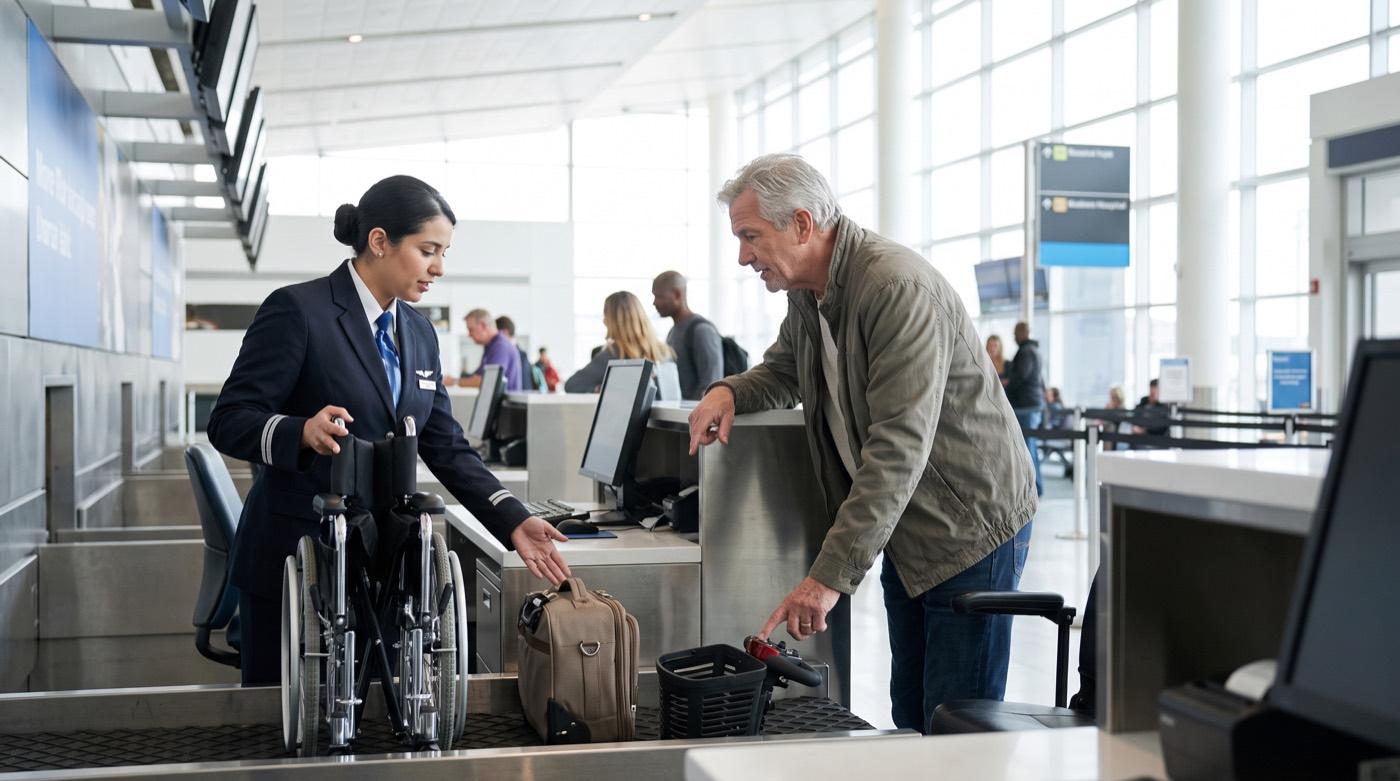
Your own mobility device is not ordinary luggage, and it does not count against your baggage allowance. Airlines have specific handling procedures, and the details are worth getting right before you reach the airport.
- Measure the folded dimensions and weight, and have them ready when you call.
- For a powered chair, know the battery type — this determines how it must be prepared.
- Ask for the device at the aircraft door rather than baggage claim if you need it in the terminal.
- Photograph the device before check-in, from several angles.
- Attach clear handling instructions to the frame, and remove loose parts such as cushions and joysticks.
- Keep a spare set of fixings and any tools you might need in your carry-on.
If assistance does not arrive
Delays happen, especially during a busy connection. Knowing the sequence in advance keeps a frustrating twenty minutes from turning into a missed flight.
- Stay where you agreed to be met, and tell the nearest gate or desk staff you are waiting.
- Ask for the airline's Complaints Resolution Official — every US carrier must have one available.
- Say clearly what you need and by when: “I need assistance to gate B14 before boarding closes at 3:40.”
- Note the time, the location and the names of the people you speak to.
- If the flight is missed as a result, ask to be rebooked before you leave the desk.
- File a written complaint afterwards with the airline, and with the US Department of Transportation if it is not resolved.
None of this requires confrontation. Calm, specific, timed requests get results far faster than apologies for asking.
Questions people ask
How far in advance should I request wheelchair assistance?
Follow your airline's stated notice period, and call earlier if you travel with a powered wheelchair or an oxygen concentrator, which usually need the most preparation.
Does my own wheelchair count as baggage?
No. A personal mobility device does not count toward your baggage allowance on US carriers. Confirm the handling procedure with the operating airline before you travel.
Who do I ask if assistance does not arrive?
Ask any airline staff member for the Complaints Resolution Official. Every US carrier must make one available, in person or by phone, while you are at the airport.
Can I request assistance for just one leg of the trip?
Yes. Assistance can be arranged for departure only, arrival only, or the connection — but say so explicitly, because a partial request is easily recorded as a full one.
Sources & how we keep this current
Rules, fees and programs change. These are the official pages we check — go to them for the version that applies on your travel date.
- US DOT — Passengers With Disabilities
- US DOT — Airline Passengers With Disabilities Bill of Rights
- US DOT — Assistance in Air Travel
Last reviewed: September 7, 2026. Confirm the linked official guidance for your own travel date.
Helping a parent? Read Airport Assistance for Parents and Helping an Older Parent Fly Alone.